





Technical Assistance
Featured Guidance
Appendix page 1
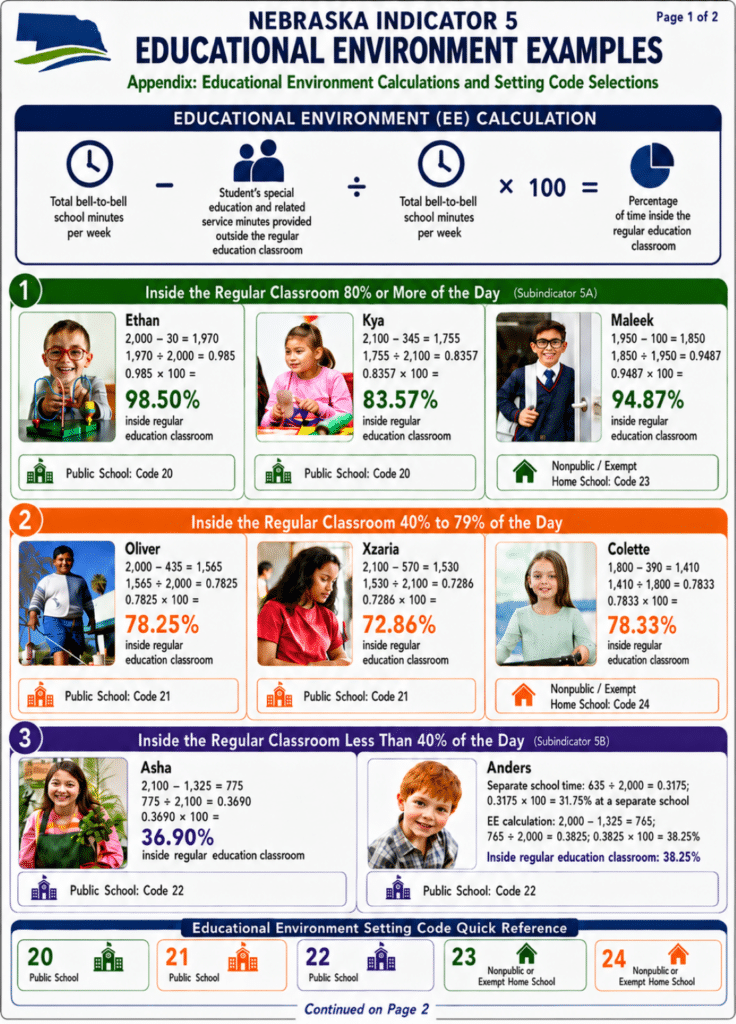
Appendix page 2

This Articulate training module is designed to help district staff learn how to confidently determine and code students in the appropriate special education environments.
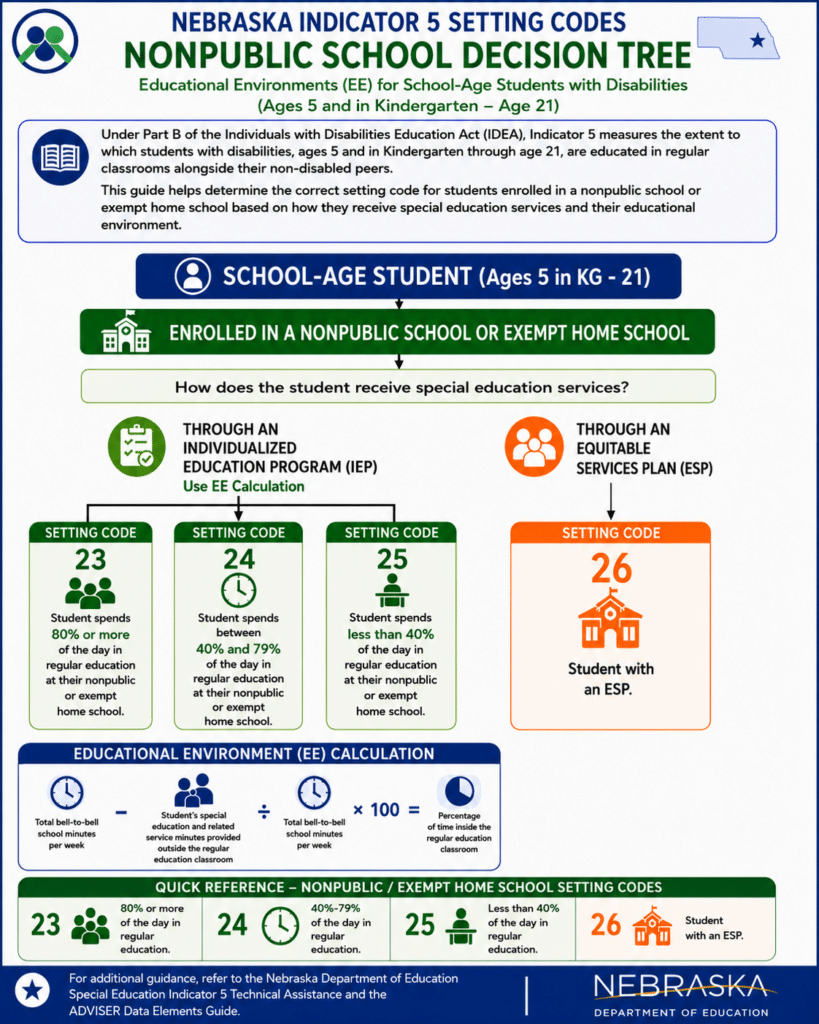
Decision Tree Nonpublic School
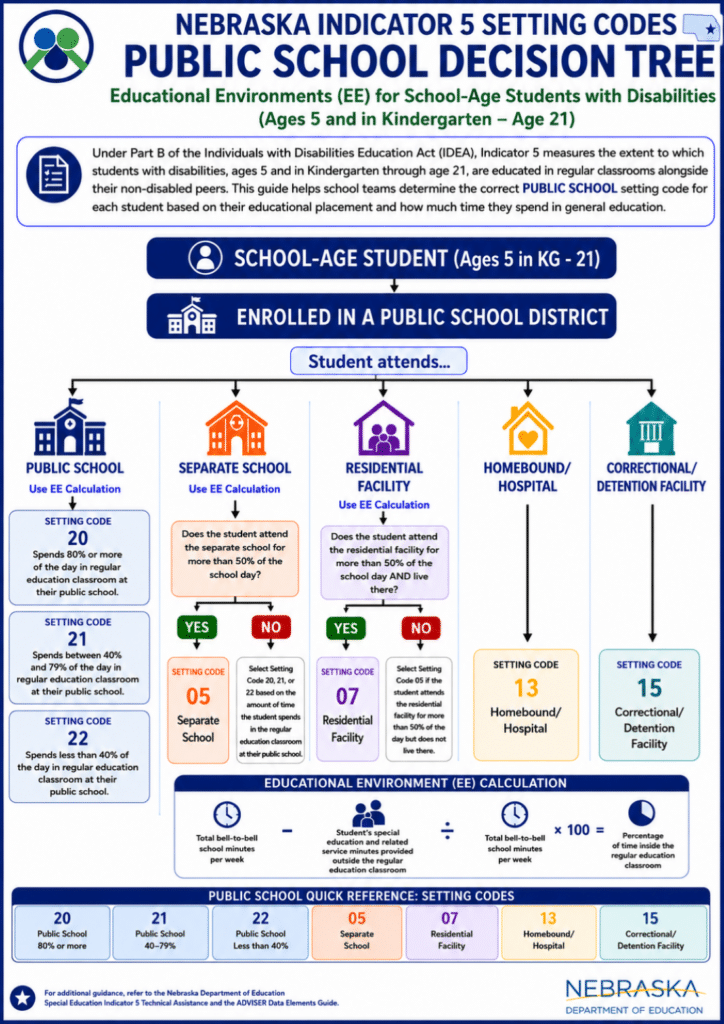
Decision Tree Public School
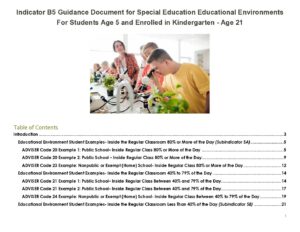
Part B – School Age Special Education Guidance
Disproportionality Support Materials
- Coordinated Early Intervening Services (CEIS) Guidance
- Policy, Procedure, and Practice Reviews for Disproportionality Guidance
- Significant Disproportionality Guidance Document
Extended School Year (ESY) Guidance Document – Aug 2018
External District Monitoring Protocol
GMS Flex Funding Application: Preschool and School-Age District Procedures Guidance Document
Guidance on Serving Homeschool, Exempt Students with Disabilities
Improving Learning for Children with Disabilities (ILCD) Guidance Document – Navigating the T.I.P.
Individualized Education Plan (IEP)
IEP Facilitation Guide 2020
IEP Special Education Services
IEP Technical Assistance Guide – 2014
IEP Models
Model IEP Guidance Document
- Annotated NDE-OSE Model IEP – Version 1 Fillable
- Annotated NDE-OSE Model IEP – Version 2-Secondary Transition Fillable
- NDE-OSE Model IEP – Version 1 Fillable
- NDE-OSE Model IEP – Version 2-Secondary Transition Fillable
Kindergarten Age Eligible (5-year-old) Preschool IEP and LRE Guidance
Language Assessment Guidance Document
Least Restrictive Environment (LRE) Guidance Document – Aug 2018
LRE-Placement-Decision-Working-Table
NDE Guide for the Provision of School Mental and Behavioral Health Services
NETA B Preschool Guidance Document
Non-Public Services to Children with Disabilities Enrolled by Their Parents in Non-Public Schools
Occupational Therapy Services and Physical Education Services in the Educational Setting – 2014
Paraeducator Guidance Document
Physical Education for Individuals with Disabilities – 2020
Policies and Procedures Guidance Documents by Topic
Prior Written Notice Guidance Document
Requirements for Working with Contracted Programs for Students with Disabilities – 2026
Serving Students Parentally Placed in Non-Public Schools, Including Exempt Homeschool
Shortened Days Guidance Document
Supporting the Behavioral Needs of Children with Disabilities: Guidance Document
Teaching Students with Specific Learning Disabilities Math
Tips for Working with a Licensed Sign Language Interpreter
*Webinar with captioning to support the TA Doc on Guidelines for Educational Interpreters.
Transition Guide for Blind, Visually Impaired, and Deaf-Blind Students – 2011
Transition Planning Guidance Document- 2022
Requirements for Working with Contracted Programs for Students with Disabilities – 2026
Assessment and Accommodations
Part C - Early Intervention Guidance
OSE Technical Assistance Partners
Assistive Technology Partnership (ATP)
Autism Spectrum Disorder (ASD) Network
Nebraska Center for the Education of Children who are Blind or Visually Impaired (NCECBVI)
Nebraska Multi-tiered System of Support (NeMTSS)
Nebraska Regional Programs For Students Who Are Deaf Or Hard Of Hearing (NRP DHH)