





NDE School Safety & Security Table of Contents
Get the Quick Link to the School Safety Webpage Topic Needed in the Table of Contents Below
October Could Bring Funding to Your School!
Growing Kindness, Strengthening School Safety, and Cultivating Student Well-Being
Nebraska schools have an exciting opportunity to participate in the Nebraska Department of Education (NDE) School Safety and Farm to School Campaigns and Challenges throughout October. The top three schools that demonstrate meaningful participation in these initiatives and their impact on student well-being will be eligible to receive funding to support and expand their efforts.
Complete the Google Document Form and the review committee will evaluate each school’s participation and accomplishments in October. Funding was generously provided by Midwest Dairy and Value Up to help schools continue and strengthen their work in promoting youth health and well-being.
Schools are encouraged to clearly articulate and demonstrate how their activities have positively impacted students through the campaigns and challenges described in this application. More information on the Campaign & Challenges expectations can be found in the google form. Including the award amounts for 1st, 2nd, and 3rd.
Award funds must be used to support ongoing efforts that enhance student health, wellness, school safety, and positive school culture and climate.
Campaign Period: October 1, 2026 – October 31, 2026:
1) Completing NDE’s Three Cheesy Bullying Prevention Lessons:
(Only for upper elementary/middle schoolers only). Schools are encouraged to complete NDE’s Three Cheesy Bullying Prevention Lessons during October.
To access these lessons, follow the steps below:
- Login to NDE canvas site: Canvas Login
- Once logged in find your Dashboard and select Commons on the left in the canvas list
- In the search bar, type “Bullying Prevention” or use ‘filter’ first & select ‘Nebraska Districts, ESU’s and NDE’ – Search for the ‘Bullying Prevention Lessons’ & select “Bullying Prevention Lessons”
2) 31-Days of Kindness Campaign:
Schools are encouraged to promote kindness throughout the month of October through creative activities and student engagement opportunities.
Some examples of kindness but not limited to: kindness cards, posters/bulletin/digital boards, Public Service Announcements, or music videos, school wide kindness calendar, daily acts of kindness, etc. Schools develop their own innovative student led kindness initiatives.
3) 31-Days Social Media Free Challenge:
Schools are encouraged to challenge students, staff, and families to reduce or eliminate personal social media use for 31-days(turn off all or only the one(s) that are taking most of your time or frustration). Since cyberbullying is among the most common concerns reported through Safe2Help Nebraska, this challenge encourages participants to engage in positive activities away from social media platforms.
4) Unity Day – Wear & Share Orange (October 21st) Challenge:
Schools are encouraged to participate in Unity Day by wearing and sharing orange to show their commitment to kindness, resiliency, and bullying prevention. Turn your school orange on October 21st!
5) Incorporate Dairy Farmers and Local Agriculture into Student Well-Being Campaign:
Schools are encouraged to engage students in activities that connect agriculture, nutrition, kindness, empathy, and wellness.
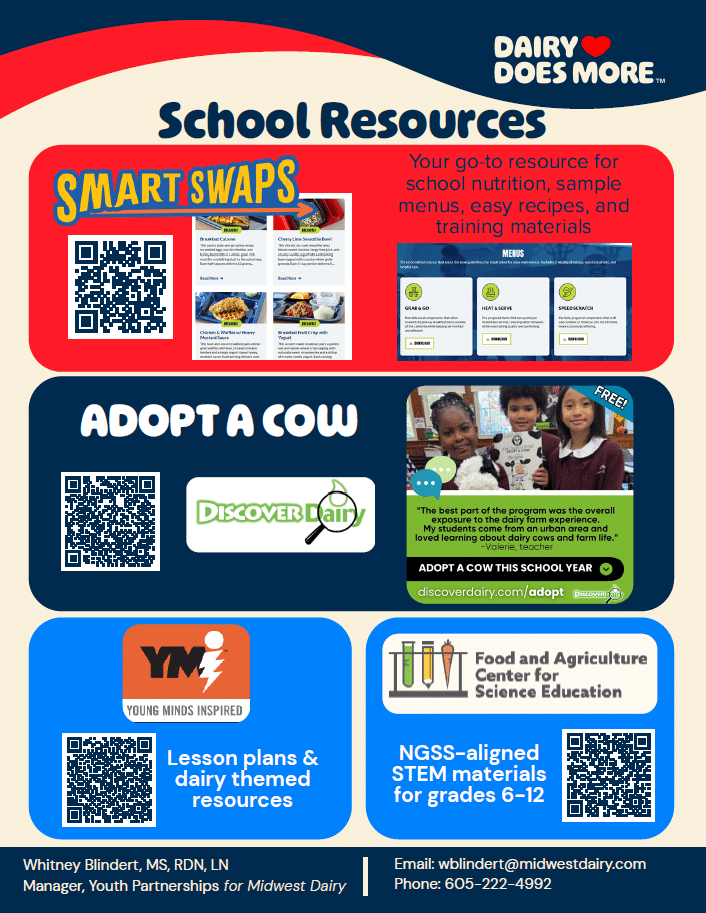
- Midwest Dairy’s resources to encourage nutritional value of dairy health Midwest Dairy School Resources
- Adopt-A-Cow to aid in kindness to animals/empathy/care for others
- Smart Swaps resources to help evolving nutritional guidelines
- Promotion of Midwest Dairy grant/taste test opportunities
- Encourage digital literacy reading beyond the headlines truth about dairy farming and cow care
- Spookley Farm Program (host story time, movie screenings)
- Organize visits to local farms, pumpkin patches, or corn mazes
- ‘Plant seeds of kindness (cultivating care for plants)
- or any other way to incorporate your local farmers.
Award Evaluation
Participation in every challenge is not required. The review committee will consider:
- Level of participation
- Creativity and innovation
- Student engagement
- Demonstrated impact on student well-being
- Promotion of kindness and bullying prevention
- Efforts to improve school culture and climate
- Integration of local agriculture, nutrition, and wellness concepts.
Schools are encouraged to provide evidence, examples, photos, and descriptions that showcase the positive outcomes of their activities.
We extend our sincere appreciation to Midwest Dairy for its generous sponsorship and commitment to supporting Nebraska students, schools, and communities.
Important Notice
Do not submit any personally identifiable information (PII) related to students when completing this application. Only aggregate, non-identifiable information, summaries, photos that comply with local policies, and program-related data should be submitted.
Application Deadline: November 20, 2026
Be creative! Celebrate October under the theme:
 “Nebraska…The Gouda Life…Spreading Kindness”
Together, we can create safer, kinder schools while supporting local agriculture and strengthening our communities. Let’s make kindness contagious throughout October—and beyond!

Register Today for the Heartland Safety & Security Summit
Register online now or fill out the form to attend the Summit and remember to mention the Summit when booking your hotel room reservation! Registration closes September 30th – Walk-in’s are available the day of the Summit.
There is a full comprehensive program agenda attendees will benefit from to include tabletop exercises, expert panel discussion, keynote presentation, breakout sessions and the Nebraska School Safety & Security Award Winner announcement.
The Summit is open to a broad audience including School safety & security personnel, first responders, Emergency managers, School psychologists, Counselors & LMHPs, School nurses, School administrators, School board members, Teachers, Community stakeholders interested in school safety best practices.
We are also welcoming participants from neighboring states throughout the Heartland region. This event provides a valuable opportunity to collaborate, exchange knowledge, share expertise, and strengthen school safety practices across our communities.
Together, we can help make every Heartland school become safer, more secure, and better prepared.
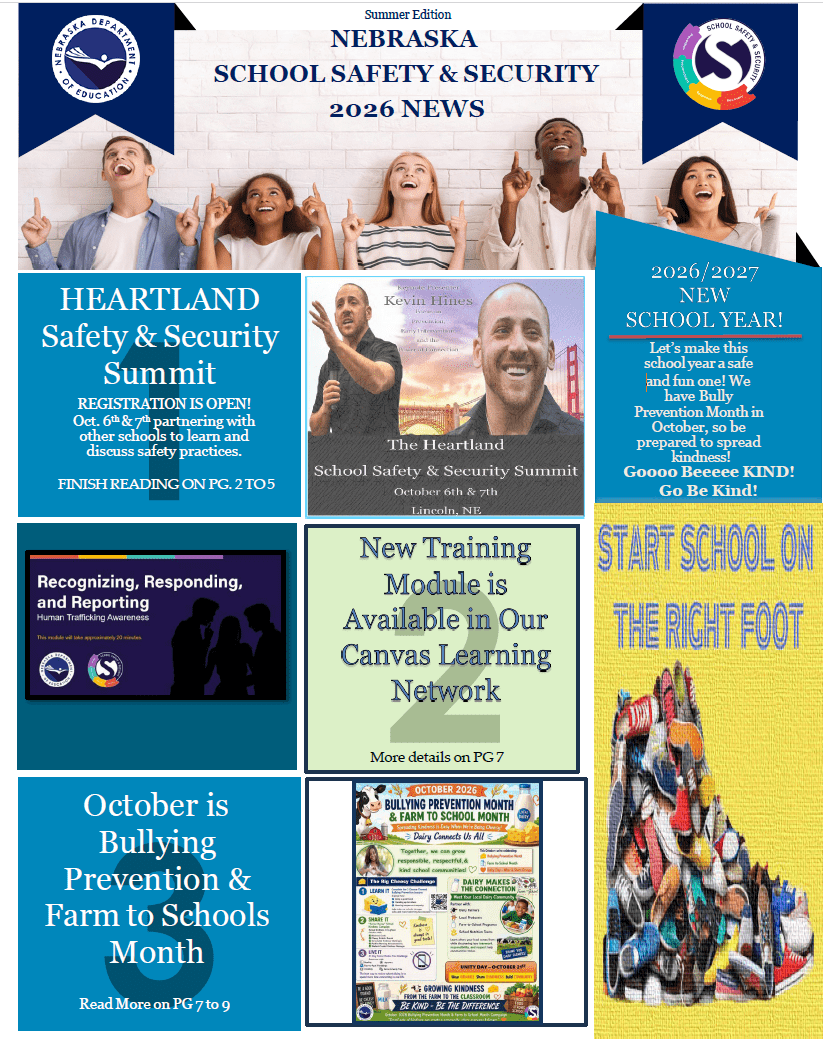
2026 Summer School Safety & Security Newsletter
HEARTLAND SAFETY & SECURITY SUMMIT
SAVE THE DATE
October 6TH & 7TH
IN LINCOLN AT THE EMBASSY SUITES BY HILTON
Contact jay.martin@nebraska.gov to be added to the mailing list. Then receive the quarterly updates in Nebraska School Safety and Security News. Keep up with the changes and new opportunities revealed every few months. Also catch up with what you may have missed in prior Newsletters.
Attention Middle and High School Students it is your opportunity to get your script put into a professionally made short film. Last year’s winner was a junior from Auburn High School. Will this year’s winner be you?

Generative A.I. Student Training, Resources, & Understanding How Privacy is Compromised on Platforms
Teach Students GenAI First, Don’t Repeat Our Prior Mistakes….
Students were effectively thrown into the digital landscape of social media without guidance, training, or ethical frameworks. As a result, they learned platform norms through trial and error—often encountering harm, misinformation, and unhealthy habits along the way.
We cannot afford to repeat that mistake with Generative AI.
Unlike social media, GenAI is not just a communication tool—it is a decision-making partner, content generator, and cognitive amplifier. Without structured education, students may either misuse it, over-rely on it, or fail to understand its limitations.
Providing students with intentional instruction on the benefits, risks, and appropriate use of GenAI leads to better outcomes in two important ways:
- Reduced Misuse Through Awareness
Students who understand issues like hallucinations, bias, privacy risks, and academic integrity are less likely to use GenAI irresponsibly or blindly. - More Purposeful and Strategic Use
Rather than using AI randomly or aimlessly, informed students can:- Ask better questions
- Evaluate outputs critically
- Use AI to enhance—not replace—thinking
- Apply it deliberately toward learning goals
The goal is not to discourage use, but to shift from passive consumption to intentional engagement.
AI for Education has provided a free course for students and resources to aid educators.
- GenAI Literacy 101 for High School Students Course
- Students Enroll NOW in the Online FREE Self-paced Course
- Staff can SEE Framework for Generative AI Literacy – Knowledge of How GenAI Works, Mindset of GenAI Use, and the Safe, Ethical, & Effective Practices
- More information is available on AI for Education
Age matters when introducing any digital content. The illustration of age appropriate instruction for digital content comes from AI for Education’s recommendations:

Privacy Lost in “Terms of Service” We Didn’t Read
Although privacy is important, most users habitually click “Accept” on Terms of Service without reviewing them. This behavior:
- Grants companies permission to collect large amounts of personal data
- Allows tracking of user activity, preferences, and behavior
- Enables companies to monetize user data through targeted ads and engagement strategies
In effect, users often unknowingly trade privacy for convenience and access.
Utilize this site to aid students in understanding how they so easily relinquish their privacy.
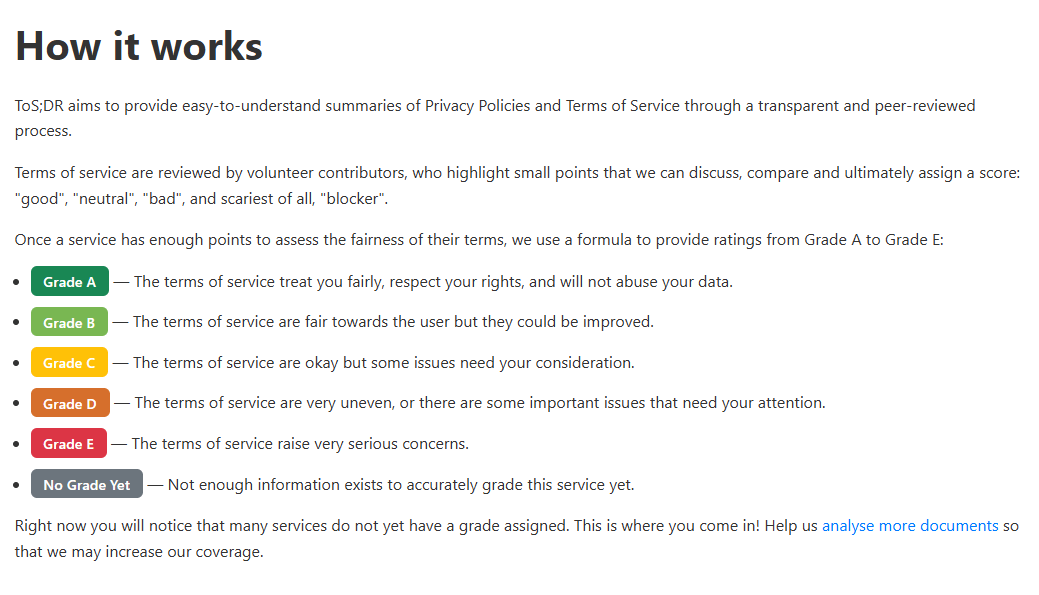
- Terms of Service – Didn’t Read site utilizes a grading system of the privacy lost by accepting their ‘terms’:
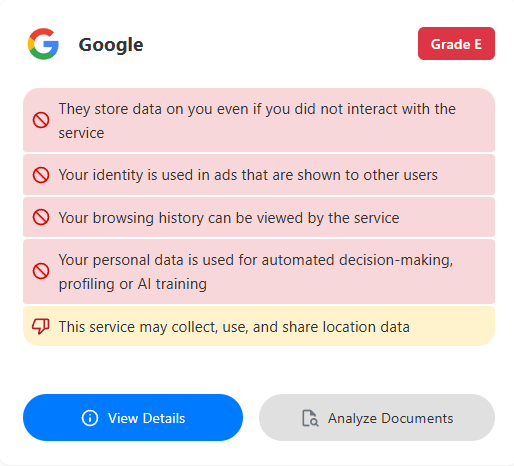
- A cliff notes version of the “Terms of Service“, with the digital platform’s pros and cons, its grade, along with the ability to view details and/or analyze documents is provided for each individual platform (see examples):
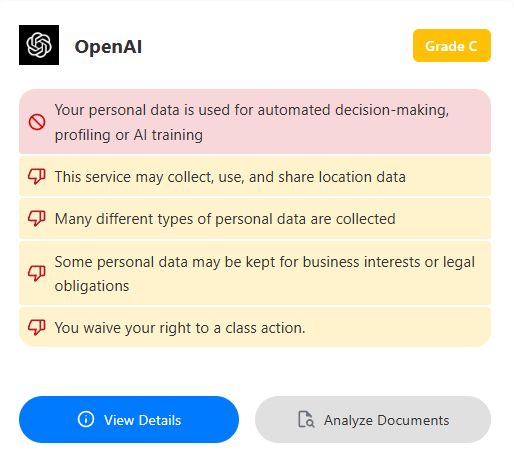
Students who recognize that their time is a valuable resource—and that it is often consumed by platforms using privacy-invasive tactics—begin to limit their digital use. As a result, they become more intentional and purposeful in how they engage online, leading to improved overall well-being.
The National Academy of Science, Engineering, and Medicine (NASEM) invited NDE Director Jay Martin to Washington D.C. to be on a panel and tabletop discussion with other panelist across the United States to discuss School Active Shooter Drills Impact on Mental Health. The NASEM Committee was put together about a year ago under the direction of Congress in response to the growing concern to the psychological toll of school active shooter drills.

The panelist came from a variety of backgrounds from schools, state departments, non-profits, and researchers. The panelist were called into D.C. on August 25th to review the report to give their perspective on the recommendations from the NASEM Committee.
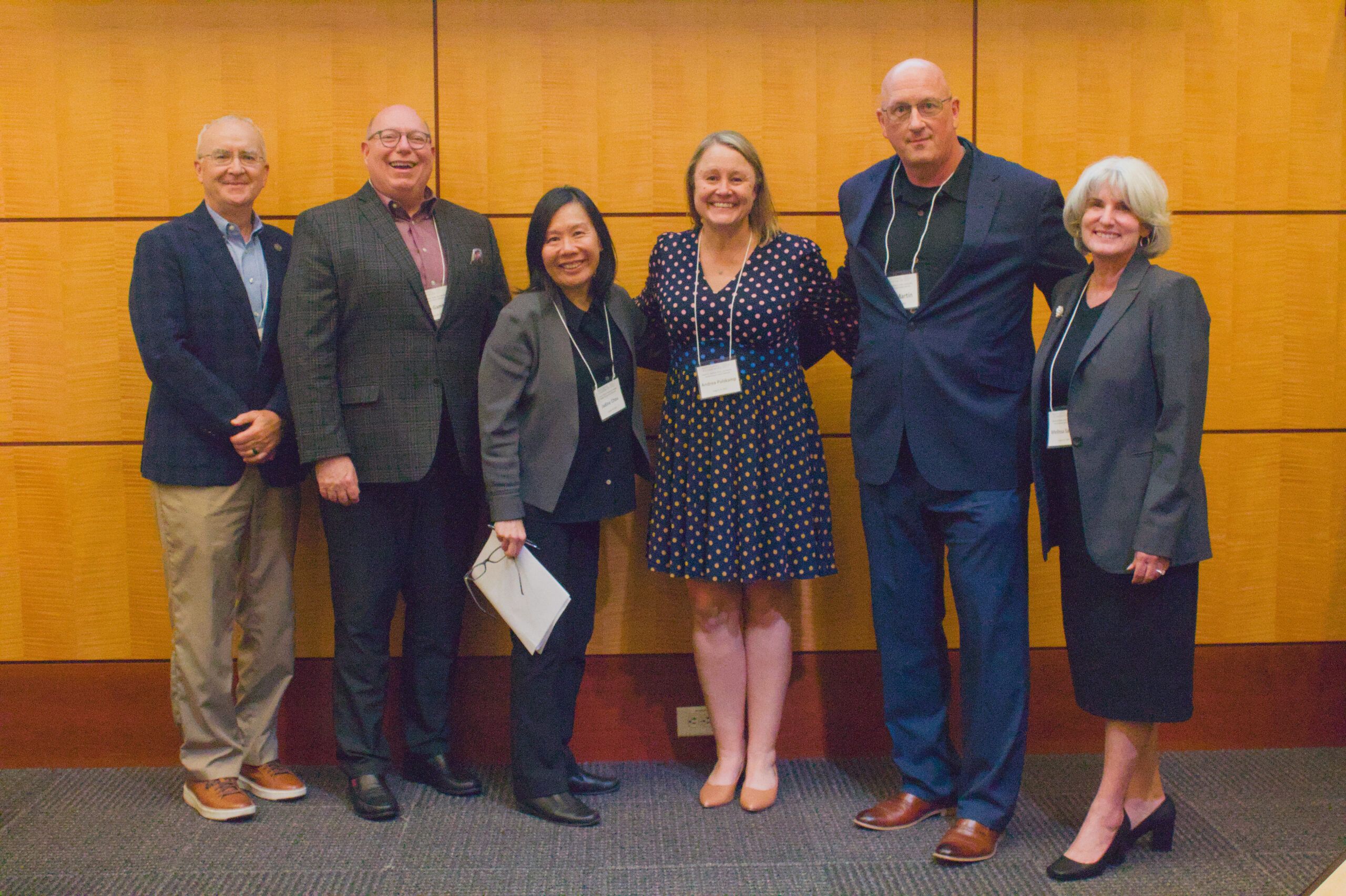
The NASEM committee’s report was released on August 13th. After the year of research, the committee ultimately landed on nine Report Recommendations surrounding the topic of active shooter drills in schools.
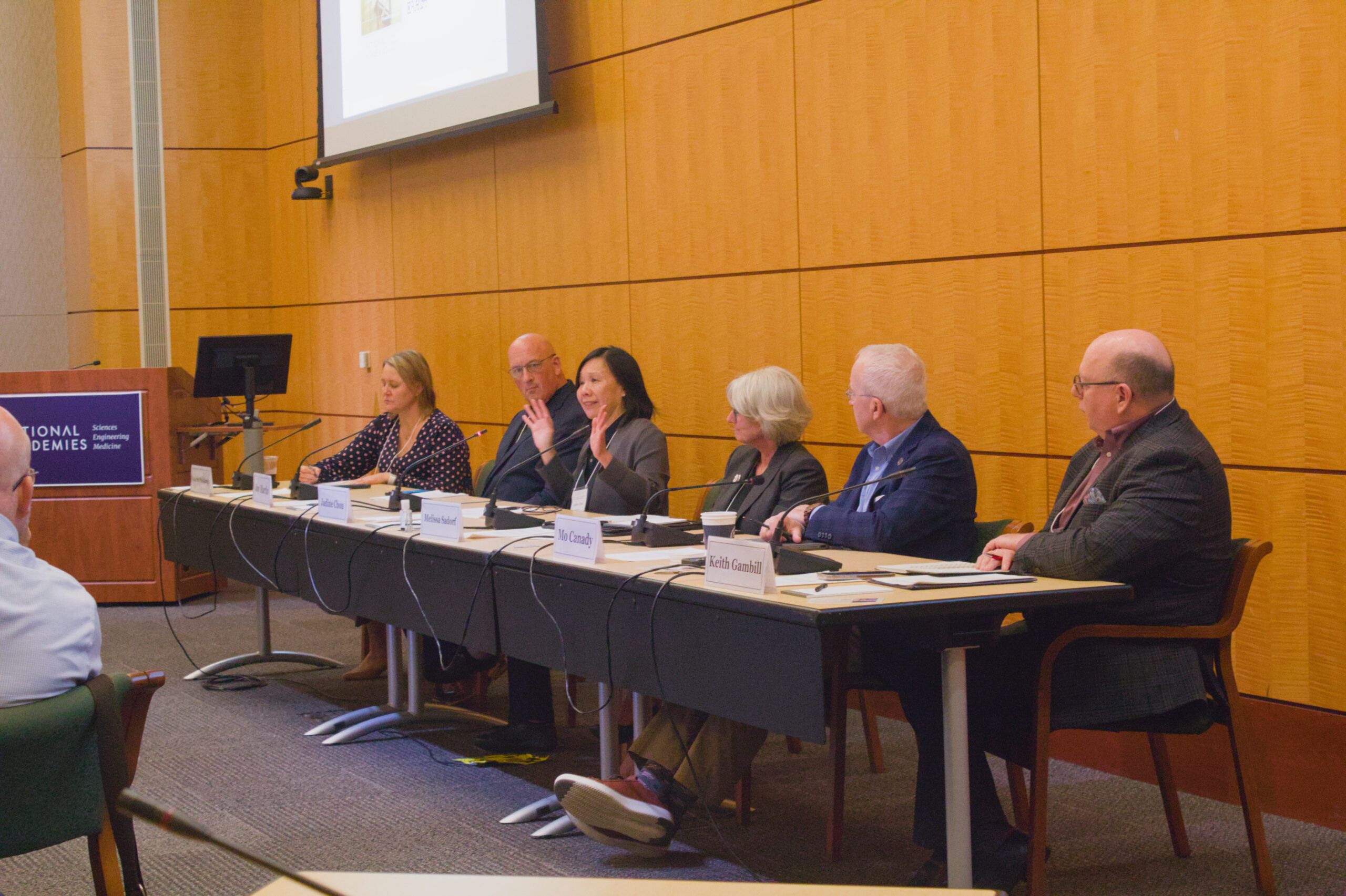
A few key notes Safety Director Martin took from being on the panel and the recommendations suggested were:
- The word ‘rural’ was not utilized in the study as panelist Melissa Sadorf Executive Director of the Arizona Rural Schools Association pointed out. Even though some of the research include was rural it made it was not clearly stated in the research.
- National Certified School Nurse, panelist Robin Cogan, mentioned making sure we invite people from all different stakeholders into the conversation (recommendation #5)…like nurses. She also made mention of changing the word “Threat Assessment” to language that is less evasive.
- Funding was a hot topic -ensuring resources are made available – as this could become potential federal, state or local level legislation, but needs to include funding to support any initiative. (recommendation 4 & 7)
- There should be federal best-practices (recommendation 3)…currently not a lot of research on this topic.
- Any sworn officers in schools should be highly trained in response to developmentally age-appropriate mental, emotional, and behavioral health needs. This was reiterated by the Executive Director for the National Association of School Resource Officers Mo Canady & NDE, Safety Director Martin (recommendation 6)
- Accessibility and addressing disabilities was also a topic for discussion. (Recommendations 8 and 9)
- Recommendation 2 was unanimously agreed upon which states prohibiting the use of high -intensity or high-sensorial simulations and exercises, as well as deception with students and staff. It was mentioned that law enforcement officers should have this type of training, as that is what they signed up for in their position. Students and school staff however should not be put into those scenarios, trainings, or exercises.
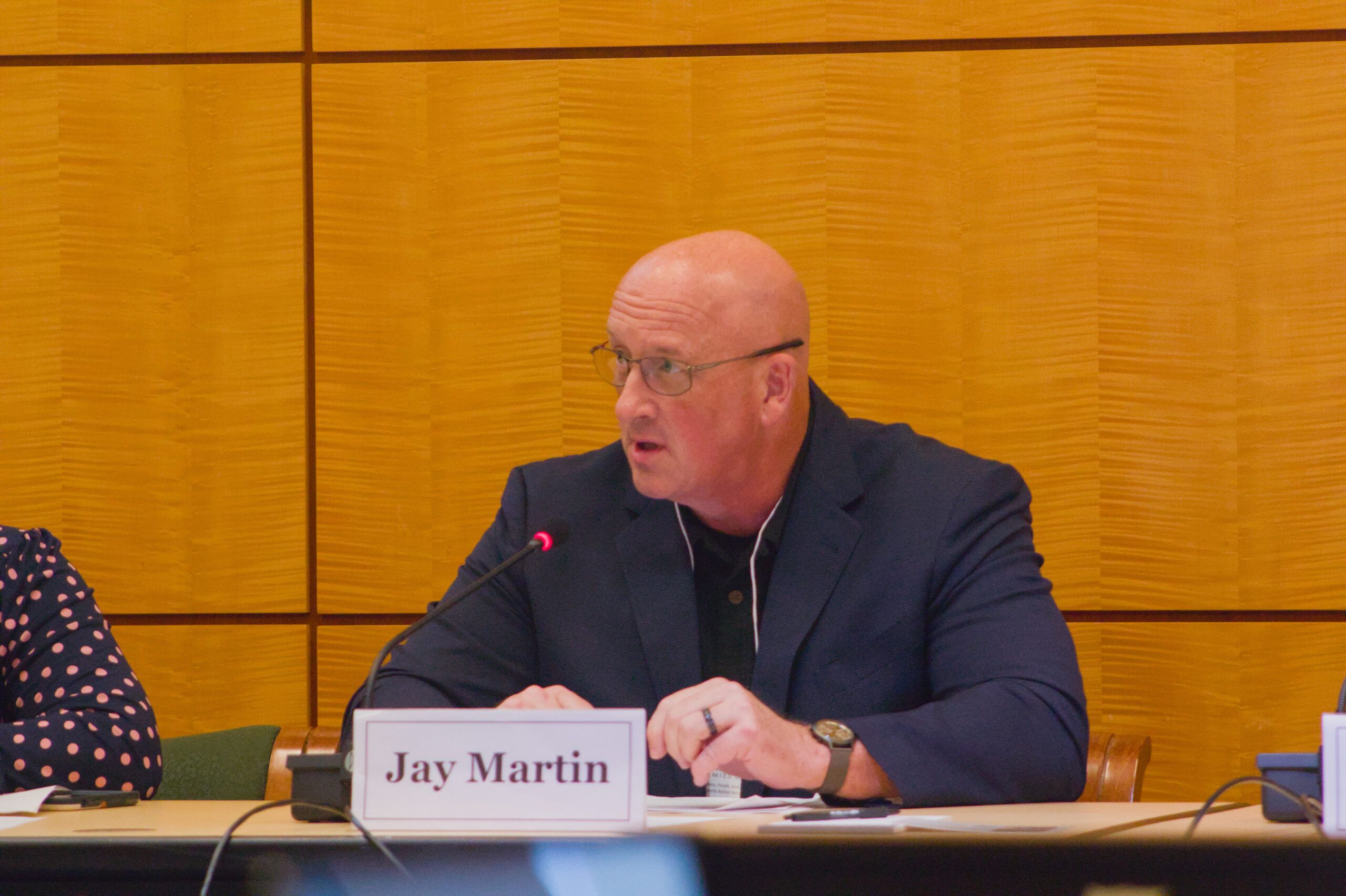
Safety Director Martin Emphasis was on Prevention and Preparedness
He stated if we work on more prevention on the root cause for these incidents we will not have to be concerned about response and recovery as much. He mentioned the quote within the study “…integrated within a comprehensive school strategy prioritizing prevention and preparedness and well-being“. Utilizing trainings like Standard Response Protocol (SRP) and Standard Reunification Method (SRM) to discuss potential school issues that may arise. Using SRP/SRM creates common terminology and discussions around all threats, hazards, and incidents so it is not so focused on one particular situation.
Nebraska’s Schools SRP/SRM trainings & exercises were included in the NASEM study thanks to the UNLPPC research report. The report was due to the NDE School Safety Teams events scheduled across our state with the I Love U Guys Foundation over the course of the last three years.

Mike Donahue Founder of Value-Up
The three things that can change the path of a potential incident in a school are having a Threat Assessment Team, Anonymous Report Services, and a Students Connection to an adult in school. Dr. Scalora and Dr. Bulling have been conducting the Basic Threat Assessment Trainings for schools. Safe2Help NE is the free anonymous report line available to schools utilizing the Boys Town’s call center licensed crisis counselors who are available 24/7 to take reports from students, parents and community members. Now with the Stronger Connections Technical Assistance and Capacity Building (SCTAC) three-year Grant NDE is able to bring Value-Up and Mike Donahue, the founder of the program, to schools across Nebraska. NDE will focus on ESU #13 schools this year.
Mike Donahue is a nationally known speaker living here in Nebraska who has a unique ability to create the connections and relationships between children and adults. After over three decades of working with youth, Mike has come to understand that so many teen issues are directly related to how students view themselves. If a student believes they have high intrinsic value and identify with that high value, they will make life choices that match their perceived value. If you would like to have Value-Up brought to your community or to learn more reach out on Value-Up. Or contact our safety team.
Canvas School Community Development Modules


Put Them on School Buildings & Digital Platforms
in Recognition to
Place School Safety First
Superior Public Schools – Digital Presentations
September 10th:
3rd-5th grades – 8:15 to 9:15
6th-8th grades – 9:30 to 10:30
9th – 12th grades – 10:45 – 11:45
Ashland Greenwood High School – Digital Presentation to Parents
September 14th, 7:00 to 7:45
Gibbon School District – Digital Presentations to Students
September 17th
Grades 4-6 8:30 to 9:30
Grades 7-12 9:45 to 10:45
Norfolk Elementary & Middle School Digital Presentations
September 23, 2026
Norfolk Middle School 9:30 – 10:30am
Norfolk Jr. High School 12:00 – 1:00pm
Clarkson Institute – Panel Discussion on AI Chat bots in Norfolk, NE at the Johnny Carson Theatre – (Safety Director is Panelist)
September 23rd – 6pm to 9pm
Connected & Resilient
A Community Conversation on Youth Mental Health
More than a movie — a dialogue on youth mental health and tech, including real solutions to build healthier digital lives.
This community event begins with a film exploring youth mental health in today’s technology-shaped world — where connection, identity, and belonging often unfold online as much as offline. A panel discussion and keynote featuring experts working at the intersections of youth mental health, technology, and storytelling will explore and build on the themes surfaced during the film.
The evening is designed not just to inform, but to reduce stigma, spark honest dialogue, and equip attendees with tools, perspective, and ideas to implement and maintain healthy relationships with technology. Whether you are a caregiver, professional, student, or community member, you are invited to watch, listen, ask questions, and be part of a supportive conversation about helping young people thrive.
Nebraska Afterschool Conference
September 25th – Younes Conference Center South – Kearney NE
Finding Digital Engagement that Ensures Youth Well-Being – 10:50-11:40
ESU #3 Team Meeting – Presentation on School Safety Initiatives for 26/27 School Year
September 28th in the Morning – TBD
Basic Behavioral Threat Assessment Training
September 29, 2026 – 9:30 am – 3:30 pm (CT) Zoom Training
See all the details within the flier on prerequisites to the training and how to register.

Access the QR code on the flyer to register for the training and utilize the other QR code to take the prerequisite training modules needed prior to the one day of in person training with UNLPPC.
Tier 1 Proactive Measures for Schools To Address Suicide Concerns
September 29th 9:00-11:00am CT or
September 30th 1:00 -3:00pm CT
The strength of the school’s Tier 1, Tier 2, and Tier 3 supports
and interventions is the foundation for suicide prevention and
response. This training encompasses proactive universal supports
that need to be in place within each tier, coupled with specific
tools and resources directed at suicide prevention and response.
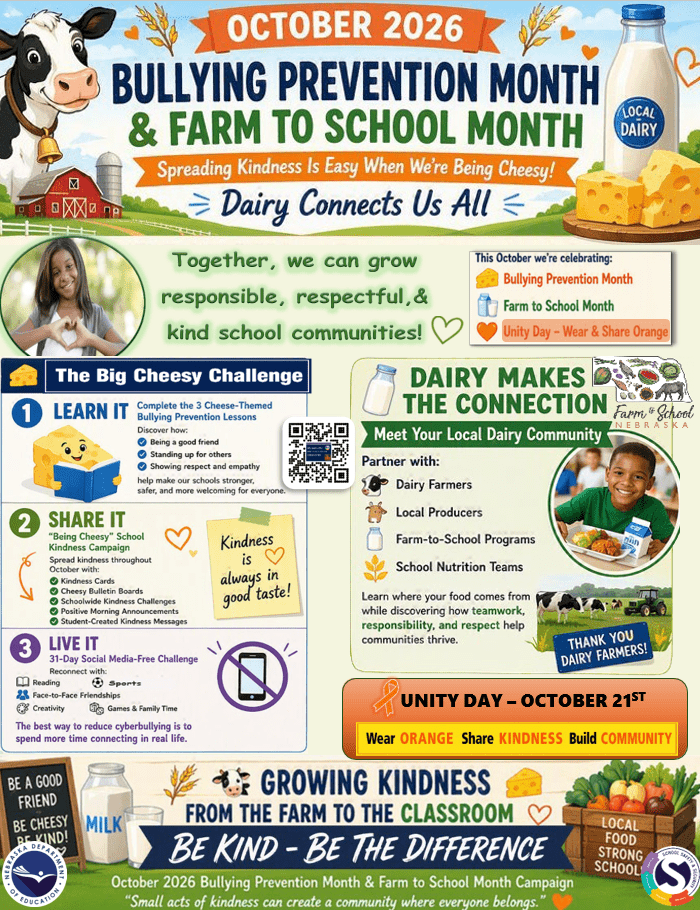
BULLYING PREVENTION MONTH

Bullying and Cyberbullying Lessons & Kindness Campaign
- Complete 3 lessons
- Students & Staff create 31 days of Kindness Campaign
- Challenge students and staff to go 31 days social media free
- October 21st is Bullying Prevention Day – Unity Day – Everyone wear Orange and decorate your school Orange
- Farm to Schools Month – involve farmers in your Campaign
Heartland School Safety & Security Summit
October 6th and 7th – Embassy Suites by Hilton Lincoln, NE
The Heartland Safety & Security Summit
Walk-ins are available the day of the event to attend the Summit!
There is a full comprehensive program agenda attendees will benefit from to include tabletop exercises, expert panel discussion, keynote presentation, breakout sessions and the Nebraska School Safety & Security Award Winner announcement.
The Summit is open to a broad audience including School safety & security personnel, first responders, Emergency managers, School psychologists, Counselors & LMHPs, School nurses, School administrators, School board members, Teachers, Community stakeholders interested in school safety best practices.
We are also welcoming participants from neighboring states throughout the Heartland region. This event provides a valuable opportunity to collaborate, exchange knowledge, share expertise, and strengthen school safety practices across our communities.
Together, we can help make every Heartland school become safer, more secure, and better prepared.
Tier 2 Proactive Measures for Schools To Address Suicide Concerns
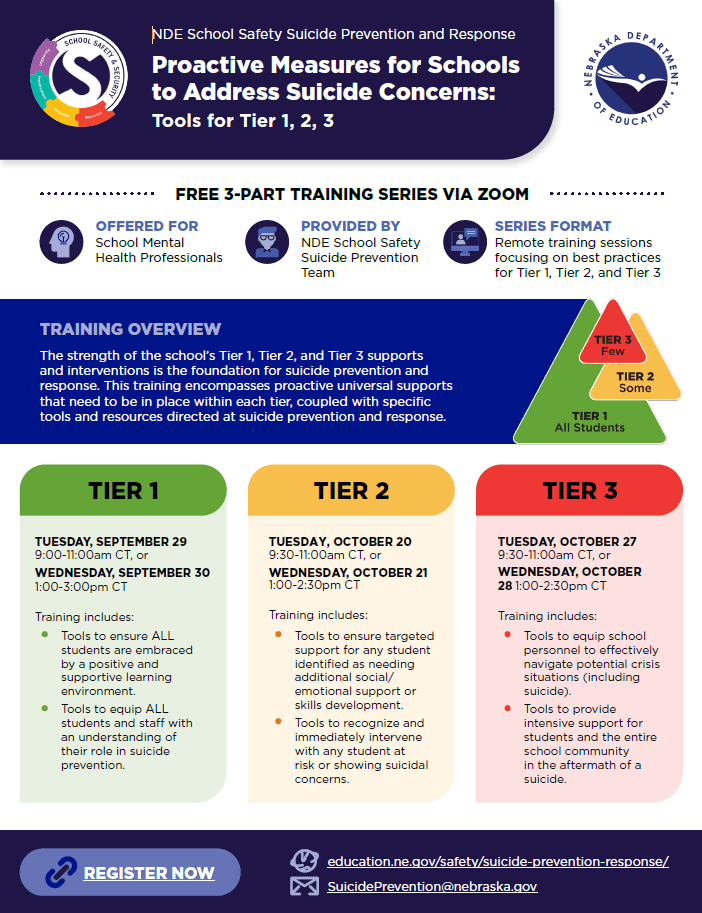
October 20th 9:30-11:00am CT or
October 21st 1:00 -2:30pm CT
The strength of the school’s Tier 1, Tier 2, and Tier 3 supports
and interventions is the foundation for suicide prevention and
response. This training encompasses proactive universal supports
that need to be in place within each tier, coupled with specific
tools and resources directed at suicide prevention and response.
Adams Central Jr-Sr High School/ESU #9 TLC Day
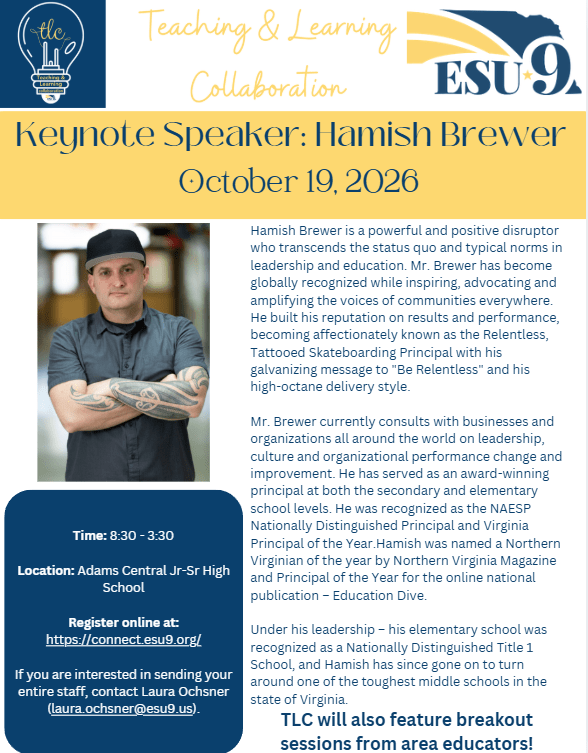 Hastings NE
October 19th 8:30 to 3:30 – Breakout Sessions:
10:00 to 10:45
Presentation Title: Legal or Illegal Substance Use Does Not Change Impact on Youth
Session Description: Medical or not here it comes! Just what is the impact of legalized medical marijuana on youth? What is the difference in today’s marijuana/cannabis/CBD/THC? How are vapes altering the drug landscape? Can youth really get access to Fentanyl that easy? Are digital platforms changing youth substance use? There are lots of questions on youth mental health today – drugs are a part of the equation. Let’s talk about the real outcomes from youth substance use and how it affects policies and procedures when it’s legal vs illegal.
Drug company & peer manipulation, drug altering appearance, keeping youth reaching for their goals and dreams, and “show me your friends I will show you your future” are key concepts in this presentation.
12:00 to 12:45
Presentation Title: School Safety is a “We” Conversation: Building a Unified Approach to Prevention, Preparedness, Response, and Recovery
Session Description: Creating safe and secure learning environments requires more than a plan on paper. It requires a coordinated effort among educators, administrators, school safety teams, first responders, and community partners. School safety is not a “me” responsibility. It is a “we” commitment.
This interactive breakout session will explore practical strategies and emerging trends that strengthen a school’s ability to prevent, prepare, respond to, and recover from emergencies and crises. Participants will gain insights into implementing the Standard Response Protocol (SRP) and Standard Reunification Method (SRM), developing effective Crisis and Safety Teams, enhancing classroom safety practices for teachers, and strengthening Emergency Operations Plans (EOPs).
The session will also address current and evolving threats, including A.I./Digital issues, swatting incidents and modules designed to support awareness and prevention of human trafficking, providing participants with actionable tools and resources to increase preparedness and resilience.
Key Topics:
• Standard Response Protocol (SRP)
• Standard Reunification Method (SRM)
• Building and sustaining Crisis and Safety Teams
• Classroom safety strategies for teachers and staff
• Swatting trends and response considerations
• Human trafficking awareness and prevention modules
• Developing and Exercising Emergency Operations Plans (EOPs)
• Building a collaborative culture of school safety through shared responsibility
1:00 to 1:45
Presentation Title: Finding Digital Engagement that Ensures Youth Well-Being
Session Description: Getting to the root cause of issues in schools’ digital media platforms and A.I. need to be a part of the discussion with the entire school community. Chatbots, A.I., and social media, continue to create tension when maximizing digital engagement conflicts with ensuring youth safety. Platforms optimize algorithms to capture personal data, time, and attention by exposing youth to emotionally charged, toxic, and harmful content. Building digital wisdom and resilience is a necessity for youth digital health & well-being. Before interacting with tech youth must learn to digitally SMILE by checking their Security, Management, Integrity, Literacy, and Ethics.
Tier 3 Proactive Measures for Schools To Address Suicide Concerns
October 27th 9:30-11:00am CT or
October 28th 1:00 -2:30pm CT
The strength of the school’s Tier 1, Tier 2, and Tier 3 supports
and interventions is the foundation for suicide prevention and
response. This training encompasses proactive universal supports
that need to be in place within each tier, coupled with specific
tools and resources directed at suicide prevention and response.
Blair High School Freshmen
October 21st & 22nd – Digital Wisdom & Resiliency
Finding Digital Engagement that Ensures Youth Well-Being
Getting to the root cause of issues in schools’ digital media platforms and A.I. need to be a part of the discussion with the entire school community. Chatbots, A.I., and social media, continue to create tension when maximizing digital engagement conflicts with ensuring youth safety. Their business model focus is to optimize algorithms to capture personal data, time, and attention exposing youth to emotionally charged, toxic, and harmful content. Building digital wisdom and resilience is a necessity for youth digital health & well-being. Before interacting with Tech youth must learn the SMILE acronym. – – Security, Manage, Integrity, Literacy, and Ethics.
Sutherland Schools –
Digital Engagement that Ensures Youth Well-Being
October 29th – 8:15 to 9:15
Norris High School – Digital Presentation to Parents and Students
7PM – Norris High Auditorium
Nebraska State Education Conference – Omaha
November 18, 19, 20th
Presentation Nov. 19th @ 2:00
Session: Chatbots, A.I., and social media, continue to create tension between maximizing digital engagement and ensuring youth safety. Digital platforms use surveillance and personal privacy tools with focused optimizing algorithms to capture personal data, time, and attention with insignificant regard to young users’ health & well-being. The digital platforms activate emotionally charged responses from youth exposing them to toxic and often harmful content with inadequate safeguards to protect them. Building digital wisdom and resilience is needed for youth tech engagement but they must learn to SMILE first to improve their digital health & well-being. – Security, Management, Identity, Literacy, and Empathy.
Millard West High School Juniors – All Day both days – 4 classes each day
November 23rd & 24th
Finding Digital Engagement that Ensures Youth Well-Being
Other Event & Training Opportunities
NCSA Events

Guidance - Resources - Posters

988 is the dialing code of the National Suicide Prevention Lifeline effort, organized at the state level to meet the growing need for crisis intervention and saving lives.
Several resources are available to schools wanting more information or to register for Safe2Help NE. These include the following:
If there are additional questions about Safe2Help NE services, or you would like to register your school, please contact jay.martin@nebraska.gov





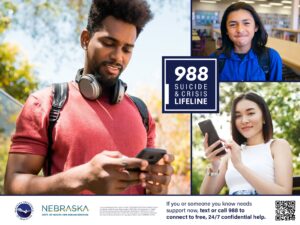
This series of 16 posters for the 988 Suicide & Crisis Lifeline is perfect for printing, or for use on the web or in emails.
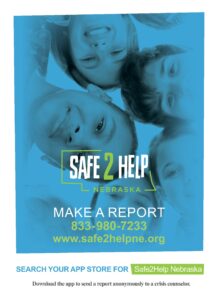
Now Available for download is the Safe2Help NE Poster to place in your school hallways!
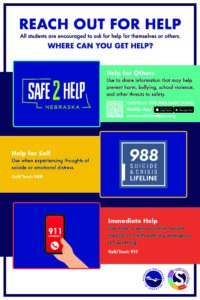
The “Reach Out For Help” poster describes where to get “Help for Others” (Safe2Help Nebraska), “Help for Self” (988 Suicide & Crisis Lifeline), and “Immediate Help” (911).
SCHOOL SAFETY & SECURITY HOME PAGE