



School Health Profiles
Since 1996, the School Health Profiles survey has been conducted biennially (during the even-numbered years) by state, territorial, and local education and health agencies with technical assistance from the CDC. Using two different surveys, principals and lead health educators are asked about health education, physical education, asthma management, school policies related to HIV/AIDS, tobacco use prevention, intentional injuries and violence, food services, and family and community involvement in school health programs. Nebraska has participated in the Profiles survey each year it has been offered and all data has been weighted.
2020 School Health Profiles Results
2020NE CHR Chronic Performance Measures
2020NE Principal CHR Sample Description
2020NE Teacher CHR Sample Description
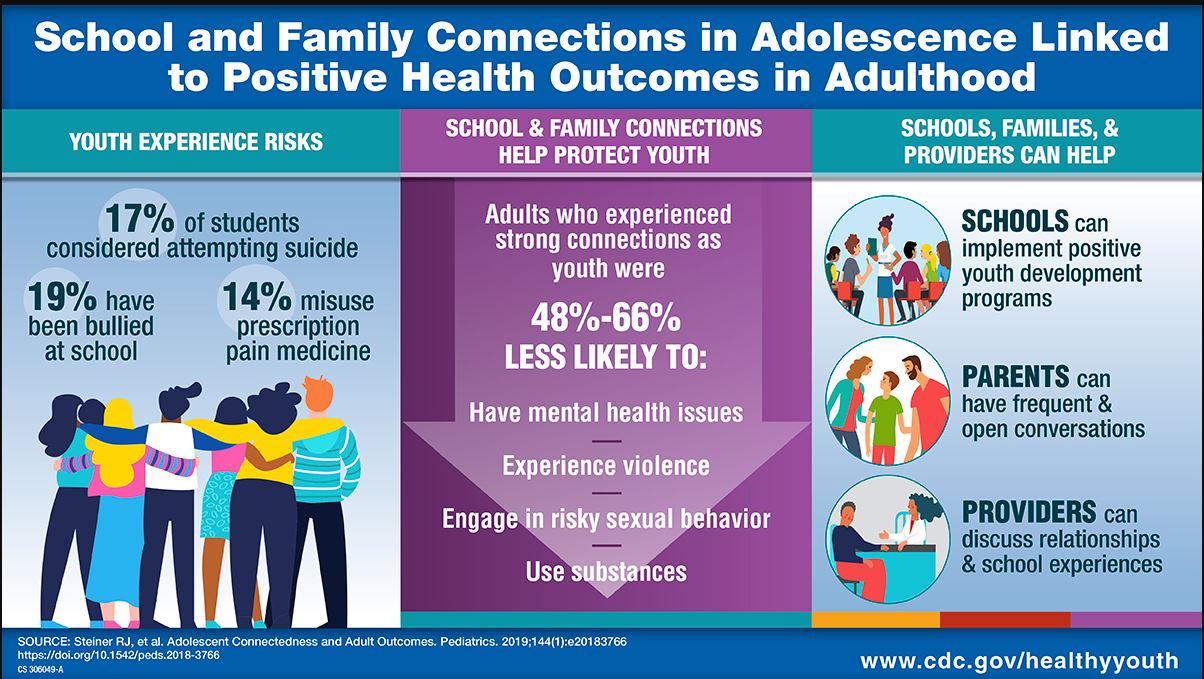
Youth Connectedness Is an Important Protective Factor for Health and Well-being
Connectedness is an important protective factor for youth that can reduce the likelihood of a variety of health risk behaviors. Connectedness refers to a sense of being cared for, supported, and belonging, and can be centered on feeling connected to school, family (i.e. parents and caregivers), or other important people and organizations in their lives. Youth who feel connected at school and home are less likely to experience negative health outcomes related to sexual risk, substance use, violence, and mental health.
In addition, school connectedness (i.e. the belief by students that adults and peers in the school care about them as individuals) has been shown to have positive effects on academic achievement, including having higher grades and test scores, having better school attendance, and staying in school longer.
For more information, please contact: Jessie Coffey at jessie.coffey@nebraska.gov or visit https://www.cdc.gov/healthyyouth/data/profiles/results.htm